
As a supplier of Tibetan Buddha Painting, I've had the privilege of exploring the intricate world of this ancient and sacred art form. One of the most captivating aspects of Tibetan Buddha Painting is the portrayal of Buddha figures, and within that, the painting of their robes holds a special significance. In this blog, we'll delve into whether there are any special techniques for painting the robes of Buddha figures in Tibetan Buddha Painting.
The Symbolism of Buddha's Robes
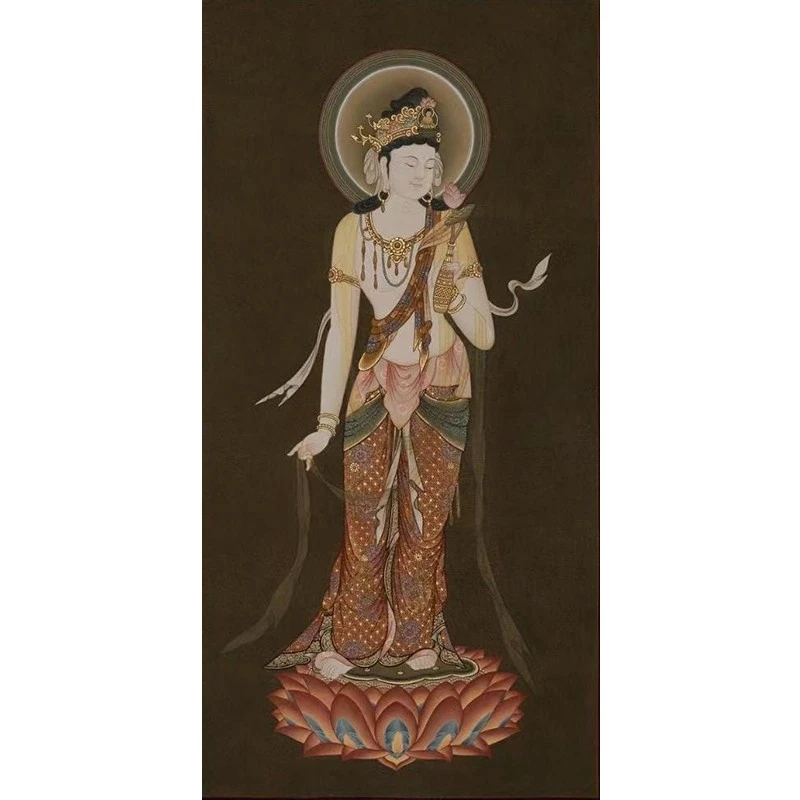
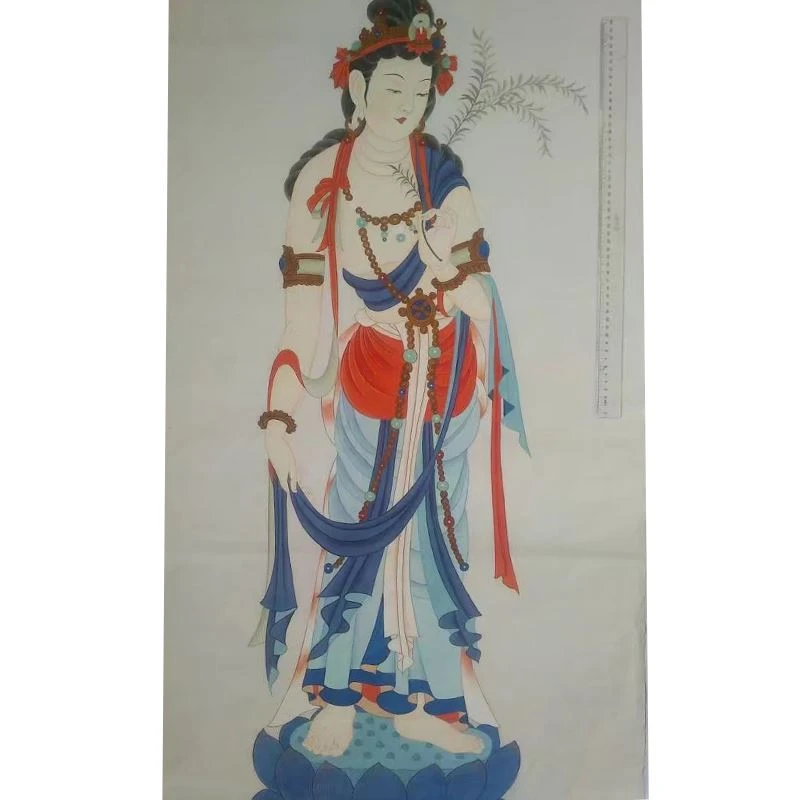
Before we explore the techniques, it's essential to understand the symbolism behind the robes of Buddha figures. In Buddhism, the robes represent renunciation, simplicity, and the detachment from worldly desires. They are typically depicted in specific colors and styles, each carrying its own meaning. For example, the color saffron is often associated with purity and enlightenment, while the folds and drapes of the robes can convey a sense of movement and grace, reflecting the Buddha's transcendence of the physical world.
Special Techniques in Painting Buddha's Robes
-
Layering and Blending
One of the fundamental techniques in painting the robes of Buddha figures is layering and blending of colors. Artists start by applying a base color, which sets the tone for the robe. This base color is often a warm or earthy tone, such as saffron or ochre. Then, they gradually add layers of lighter and darker colors to create depth and dimension. Blending these colors smoothly is crucial to achieve a realistic and harmonious effect. For instance, when painting the folds of the robe, artists use a combination of light and dark shades to give the illusion of volume and shadow. This technique requires patience and a steady hand, as even the slightest mistake can disrupt the overall balance of the painting. -
Use of Mineral Pigments
Tibetan Buddha Painting is known for its use of natural mineral pigments. These pigments are derived from various minerals and stones, such as lapis lazuli, malachite, and cinnabar. They are highly valued for their rich and vibrant colors, as well as their durability. When painting the robes, artists carefully select the pigments to match the desired color and symbolism. For example, blue pigments made from lapis lazuli may be used to represent the purity of the sky or the Buddha's infinite wisdom. The use of mineral pigments not only adds to the aesthetic appeal of the painting but also ensures its longevity, allowing the artwork to retain its beauty for generations. -
Precision in Depicting Folds and Drapes
The folds and drapes of the Buddha's robes are often depicted with great precision and detail. Artists use fine brushes to create delicate lines and curves that mimic the natural flow of the fabric. Each fold is carefully observed and replicated, taking into account the direction of the light and the way the fabric falls. This attention to detail not only adds a sense of realism to the painting but also enhances its spiritual significance. The folds of the robe can be seen as a metaphor for the Buddha's teachings, which unfold and reveal themselves to those who seek enlightenment. -
Symbolic Patterns and Motifs
In addition to the folds and colors, the robes of Buddha figures may also feature symbolic patterns and motifs. These patterns are often derived from Buddhist scriptures and iconography, and they carry deep spiritual meanings. For example, lotus flowers, which are a symbol of purity and enlightenment, may be depicted on the robe. Other common motifs include the Dharma wheel, which represents the Buddha's teachings, and the swastika, which symbolizes good fortune and well - being. Painting these patterns requires a high level of skill and artistic ability, as they must be accurately and meticulously reproduced.
Our Offerings
At our company, we specialize in providing high - quality Tibetan Buddha Paintings that showcase these traditional techniques. Our Tibetan Buddha Painting collection features a wide range of Buddha figures, each with their robes painted with the utmost care and attention to detail.
We also offer Buddhist Wall Art that can be used to adorn your home or meditation space. These paintings are not only beautiful works of art but also serve as a source of inspiration and spiritual guidance.
Our Handmade Buddha Painting collection is created by skilled artisans who have mastered the traditional techniques of Tibetan Buddha Painting. Each painting is a unique masterpiece, reflecting the artist's dedication and reverence for the subject matter.
For those interested in religious art, our Hand Painted Religious Art collection includes a variety of paintings featuring Buddha figures, as well as other religious themes. These paintings are perfect for collectors or anyone looking to add a touch of spirituality to their environment.
We also have a selection of Lotus Buddha Painting, which prominently feature the lotus flower symbol, adding an extra layer of spiritual significance to the artwork.
Contact Us for Purchase and Discussion
If you are interested in our Tibetan Buddha Paintings or have any questions about the techniques used in creating them, we encourage you to reach out to us for a purchase and discussion. We are more than happy to provide you with detailed information about our products, including size, price, and customization options. Our team of experts is dedicated to helping you find the perfect piece of art that meets your needs and preferences.
References
- Smith, John. The Art of Tibetan Buddhism. Oxford University Press, 2010.
- Wangchuk, Tenzin. Tibetan Buddhist Iconography. Himalayan Books, 2015.