

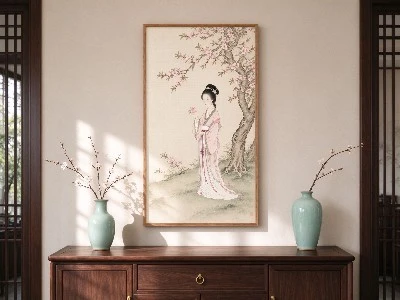
Creating a sense of depth in a handmade Buddha painting is a nuanced art form that combines technical skill, artistic intuition, and a deep understanding of Buddhist iconography. As a supplier of Handmade Buddha Painting, I have spent years exploring the various techniques and principles that can bring these spiritual artworks to life with a three - dimensional quality. In this blog, I will share my insights on how to achieve this effect, offering practical advice for both novice painters and those interested in the art of Buddha painting.
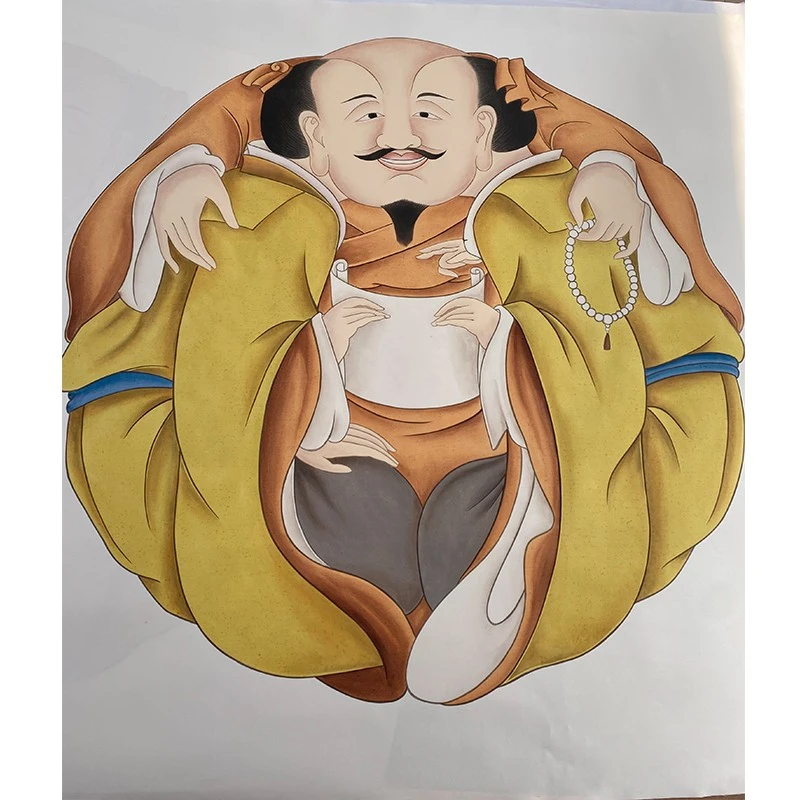
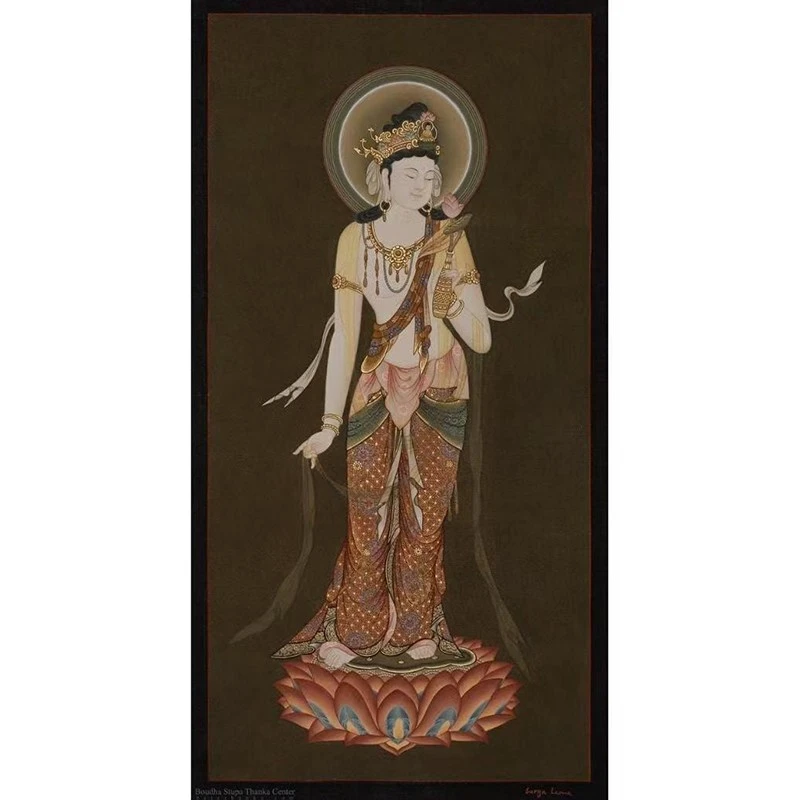
Understanding the Basics of Depth in Art
Before delving into the specific techniques for adding depth to a Buddha painting, it is essential to understand the fundamental concepts of depth in art. Depth refers to the illusion of distance and space on a two - dimensional surface. It allows the viewer to perceive the painting as having a real - like three - dimensional quality, rather than just a flat image. There are several key elements that artists use to create this illusion:
Perspective: One of the most basic and effective ways to create depth is through perspective. Linear perspective involves using a vanishing point on the horizon line to create the illusion of receding space. In a Buddha painting, this can be applied to elements such as the background scenery, the architecture, or the placement of other figures. For example, if you are painting a Buddha in a temple, the columns, arches, and rows of seats can be drawn using linear perspective to give the impression of a large, open space.
Overlapping: Overlapping objects is a simple yet powerful technique for creating depth. When one object partially covers another, it indicates that the covered object is further away. In a Buddha painting, you can use overlapping to show the relationship between the Buddha, the attendants, and the surrounding decorations. For instance, if there are flowers or clouds in the background, having them partially obscured by the Buddha or his robe can enhance the sense of depth.
Size Variation: Objects that are closer to the viewer appear larger, while those that are farther away appear smaller. By carefully adjusting the size of different elements in the painting, you can create a sense of distance. In a Buddha painting, the Buddha can be painted larger than the other figures or objects in the scene to emphasize his importance and also to suggest a sense of proximity. The smaller figures of devotees or celestial beings in the background can then convey a greater distance.
Color and Tone: Color and tone can also play a significant role in creating depth. Darker colors tend to recede, while lighter colors come forward. In a Buddha painting, you can use this principle to add dimension. For example, the background can be painted in darker, cooler tones to make it seem more distant, while the Buddha's body can be highlighted with lighter, warmer colors to bring it to the forefront. Additionally, using a gradient of tones can create a sense of volume and depth on the Buddha's form.
Applying Depth Techniques in Handmade Buddha Paintings
Enhancing the Background
The background is a crucial element in creating depth in a Buddha painting. It sets the scene and provides a context for the Buddha figure. When painting the background, consider using a combination of perspective, color, and tone.
Landscape and Architecture: If your Buddha painting features a landscape or architectural setting, use linear perspective to draw the lines of buildings, mountains, or trees. For example, in a Tibetan Buddha Painting, the traditional Tibetan temples can be drawn with converging lines that lead to a vanishing point on the horizon. This will create a sense of vastness and distance. Use darker colors and softer edges for the elements in the background to make them appear further away.
Atmospheric Perspective: Atmospheric perspective is another effective technique for the background. As objects get farther away, they appear less distinct and have a bluish - gray tint due to the scattering of light in the atmosphere. In a Buddha painting, you can apply this by gradually reducing the saturation and contrast of the background colors. For instance, if there are mountains in the background, paint the distant ones with a lighter, bluer tone compared to the closer ones.
Creating Volume on the Buddha Figure
The Buddha figure is the focal point of the painting, and creating a sense of volume on it is essential for a realistic and engaging artwork.
Light and Shadow: Understanding the direction of light is crucial for creating volume. Determine the primary light source in your painting, whether it is natural sunlight from a window or a symbolic celestial light. Then, use shadows to define the shape of the Buddha's body. Darker shadows can be placed on the areas that are furthest from the light source, such as under the arms, around the neck, and on the folds of the robe. Lighter areas receive more direct light, such as the face, hands, and the tops of the shoulders. By carefully blending the light and shadow areas, you can give the Buddha a three - dimensional appearance.
Highlighting and Detailing: Adding highlights and details can also enhance the sense of volume. Use a lighter color or a touch of white to create highlights on the areas that catch the most light, such as the tips of the fingers, the edges of the robe, and the center of the forehead. These highlights will make the surface of the Buddha's body appear smooth and rounded. Additionally, adding fine details like the wrinkles on the robe or the texture of the skin can further enhance the realism and depth.
Incorporating Surrounding Elements
The elements surrounding the Buddha, such as attendants, flowers, or symbols, can also contribute to the overall sense of depth.
Overlapping and Placement: Use overlapping to show the spatial relationship between the Buddha and the other elements. For example, if there are attendants standing beside the Buddha, have one attendant partially cover the other to indicate their relative position. Place the smaller elements, such as flowers or jewels, in the background or at the edges of the painting to create a sense of depth.
Symbolic Depth: In addition to the physical depth, Buddha paintings often carry symbolic meaning. Incorporating symbolic elements can add a deeper layer of interpretation to the painting. For example, a Lotus Buddha Painting may feature the Buddha sitting on a lotus flower, which symbolizes purity and enlightenment. By using different colors and sizes of lotus flowers in the background and foreground, you can not only create a sense of depth but also enhance the symbolic significance of the painting.
The Role of Materials and Techniques
The choice of materials and painting techniques can also have a significant impact on the sense of depth in a handmade Buddha painting.
Brushes and Strokes: Different brushes and brushstrokes can be used to create different effects. For example, broad, sweeping strokes can be used for the background to create a sense of distance and movement, while fine, detailed strokes can be used for the Buddha figure and the small elements. Using a combination of dry - brushing, stippling, and blending techniques can add texture and depth to the painting.
Paints and Mediums: The type of paints and mediums you use can also affect the depth of the painting. Acrylic paints dry quickly and can be layered to create a rich, textured surface. Oil paints, on the other hand, have a slower drying time, which allows for more blending and manipulation of colors. You can also use mediums such as glazes to add transparency and depth to the colors.
Conclusion
Creating a sense of depth in a handmade Buddha painting is a multi - faceted process that requires a combination of technical skills, artistic vision, and a deep understanding of the subject matter. By mastering the principles of perspective, overlapping, size variation, color, and tone, and by carefully choosing the materials and techniques, you can bring your Buddha paintings to life with a three - dimensional quality that is both visually stunning and spiritually inspiring.
If you are interested in exploring the world of Hand Painted Figure Art or are looking to purchase unique Handmade Buddha Paintings for your collection or for religious purposes, feel free to reach out. We are always open to discuss your requirements and provide you with the highest - quality handmade Buddha paintings that capture the essence and depth of Buddhist art. Whether you are an individual collector, a religious institution, or a retailer, we can offer you a wide range of options in Hand Painted Religious Art. Contact us to start a procurement conversation and bring the beauty of Buddhist art into your space.
References
- Artincontext.org. (2023). "The Basics of Perspective in Art."
- Gombrich, E. H. (1984). The Story of Art. Phaidon Press.
- Lomask, L. (1990). Master Drawings: A Comparative Study. Harry N. Abrams.